Business school education plays a crucial role in developing future managers, leaders, and entrepreneurs who can navigate the complexities of the modern business world. Unlike traditional academic programs, business school education focuses on a balanced combination of theoretical knowledge, practical exposure, and personality development, enabling students to become industry-ready professionals.
At the foundation of business school education is a strong curriculum covering core management disciplines such as marketing, finance, human resources, operations, strategy, and economics. These subjects help students understand how organizations function and how strategic decisions are made. Over time, students are encouraged to specialize in specific areas based on their career goals, allowing them to develop domain expertise while maintaining a broad managerial perspective.
A defining feature of business school education is its practical and experiential learning approach. Teaching methodologies such as case studies, live projects, simulations, internships, and industry-based assignments expose students to real business challenges. This hands-on learning helps bridge the gap between classroom concepts and corporate realities, enhancing problem-solving, analytical thinking, and decision-making skills.
Business schools also place strong emphasis on skill development and leadership training. Communication skills, teamwork, critical thinking, negotiation, and ethical decision-making are nurtured through group discussions, presentations, workshops, and management events. Participation in clubs, seminars, conferences, and competitions further contributes to confidence building and overall personality development.
Another important aspect of business school education is industry and global exposure. Close collaboration with corporate organizations ensures that curricula remain updated and relevant. Guest lectures by industry leaders, corporate mentoring, and strong internship and placement support help students understand market expectations. Many business schools also offer international immersion programs and global collaborations, preparing students to work in multicultural and cross-border business environments.
In addition, business schools contribute to innovation and entrepreneurship by encouraging research, startups, and new business ideas. Incubation centers, entrepreneurship cells, and faculty mentorship support students who aspire to become job creators rather than job seekers.
Overall, business school education is a transformative journey that goes beyond academic learning. By combining knowledge, skills, values, and real-world exposure, it prepares individuals to take on leadership roles and contribute meaningfully to organizations and society. For students seeking professional growth, strategic thinking, and long-term career success, business school education provides a strong and future-ready foundation.
Choosing the right MBA college is one of the most important decisions an aspiring manager makes. The 2025–26 admissions cycle brought small but meaningful shifts — greater competition for the…
Choosing the right & Best PGDM Colleges in India with Placement is one of the most important decisions for management aspirants. With thousands of institutes offering PGDM programs, students today…
Over the last decade, the global MBA landscape has undergone a quiet but powerful shift. Once dominated almost exclusively by business schools in the United States and the United Kingdom,…
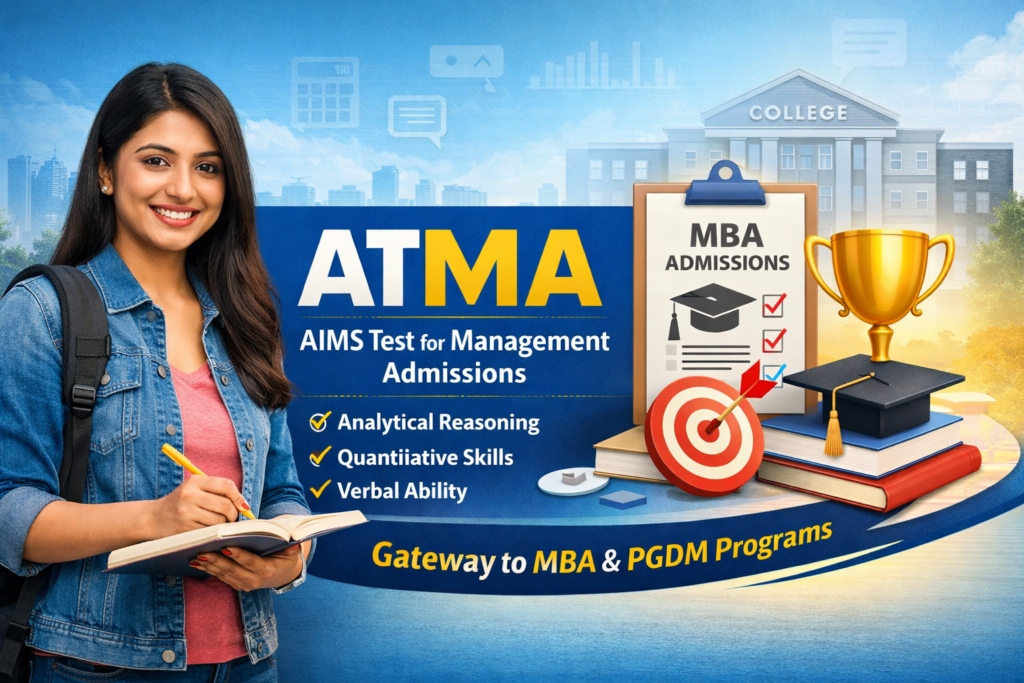
The AIMS Test for Management Admissions (ATMA) is a national-level entrance examination conducted for admission to MBA, PGDM, and MCA programs in India. Designed to evaluate essential managerial aptitude, ATMA…
A Delhi-based applicant hunting for “MBA in Banking and Finance college near me” needs to weigh practicalities (commute, living costs) as much as academic reputation. FIIB (Fortune Institute of International…
A Post Graduate Diploma in Management (PGDM) is one of the most popular management programs in India. It opens doors to leadership roles in corporate sectors, entrepreneurship, consulting, and more.…
If you’re planning a career in management, you’ve probably asked this question already: “Is PGDM equivalent to MBA?” The short answer is: yes, in most practical career scenarios PGDM can…
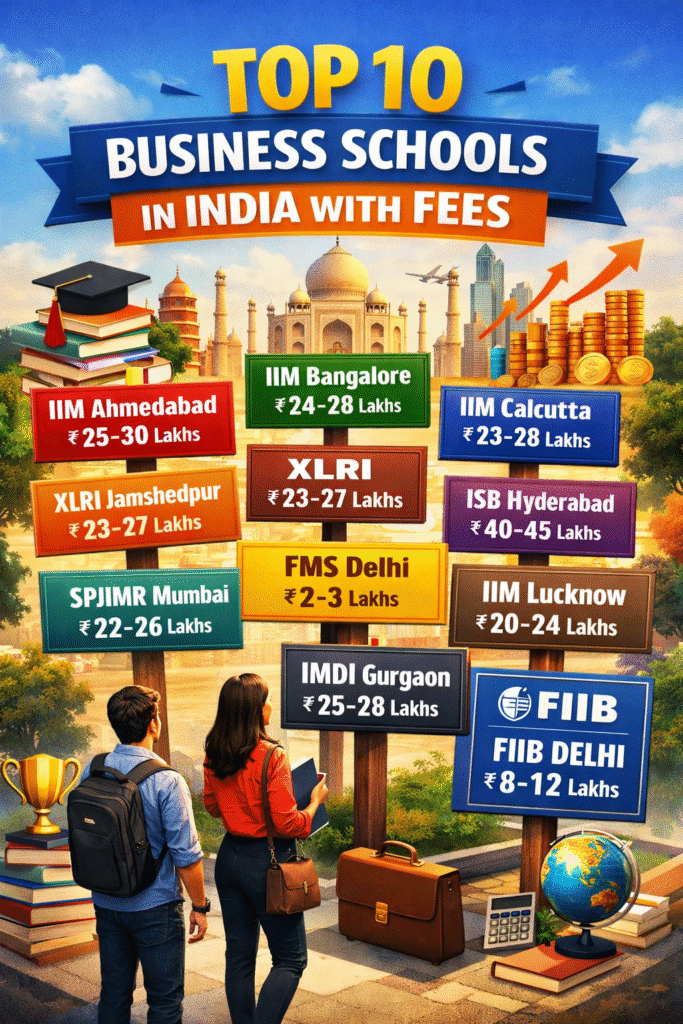
Choosing the right business school in India is one of the most important decisions for your career. The best B-schools don’t just offer a degree—they give you strong industry exposure,…
Choosing the right business school is one of the most important decisions for MBA aspirants. With hundreds of institutes in India offering management programs, finding a college that delivers academic…
When it comes to pursuing an MBA in India, the Indian Institutes of Management (IIMs) stand at the pinnacle of management education. Among them, IIM Lucknow holds a special place…